Oil Tank Insurance And Fuel Oil Release Coverage In New York
What the insurer is asking for, and the document that answers it.
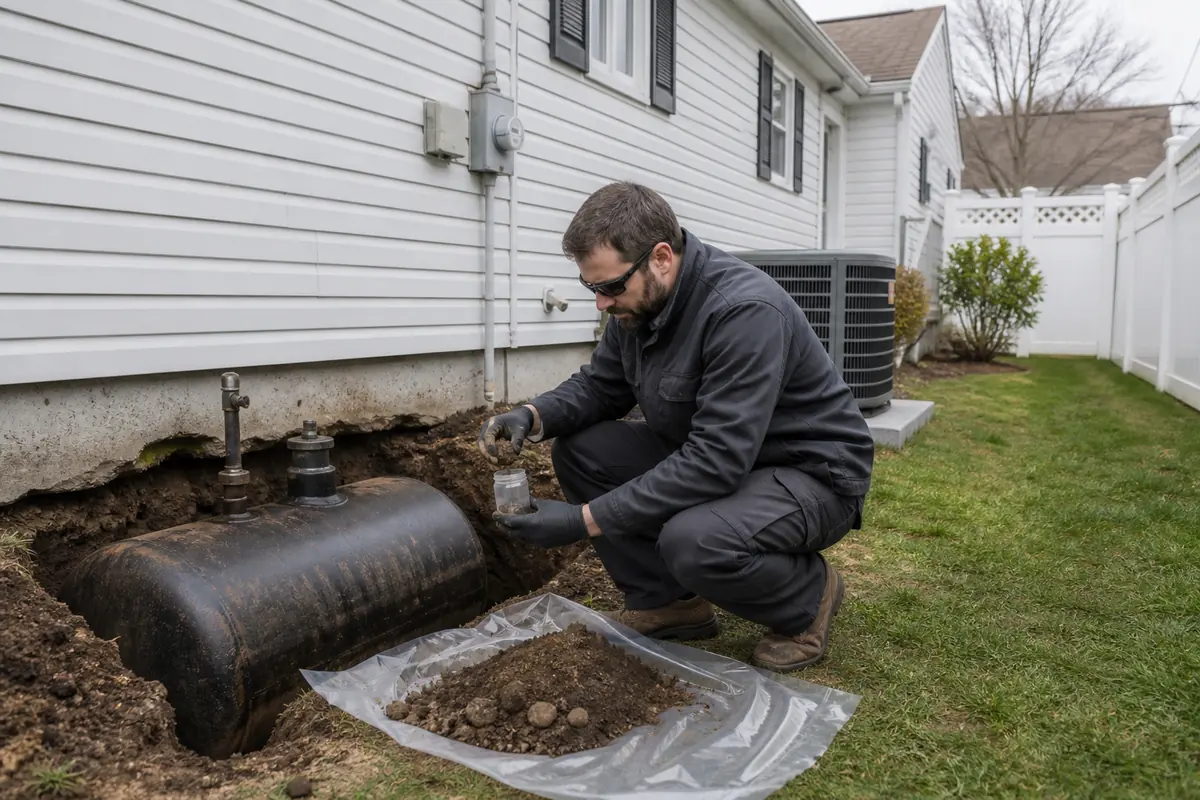
What matters before the work starts.
Insurance is the most common reason an Islip homeowner books this work without wanting to. A renewal notice arrives with a condition attached, and the tank becomes urgent on somebody else's timetable.
Why A Buried Tank Sits Outside Most Policies
Standard homeowners policies generally treat gradual seepage from a storage tank differently from a sudden accidental event, and pollution exclusions are common. That is a matter for your carrier and your policy wording, not something we can decide for you.
What we can tell you is what carriers ask for once they raise it, because it is consistently the same evidence.
What The Carrier Usually Wants To See
Evidence that the tank is out of service and closed to a recognized standard, evidence of where it went, and where the ground was tested, the results. In practice that is a closed Town of Islip permit plus the disposal record.
Produce those three things and the condition on the policy usually has an answer. We cannot promise how a carrier will decide, and anyone who does is guessing on your behalf.
The Cost Nobody Puts On A Quote
The published Long Island remediation ranges are the real exposure and they disagree with each other by a factor of more than twenty. One company publishes $4,500 to $15,000, another $8,000 to $10,000, a third $10,000 and above, a fourth $10,000 to $100,000 and above.
None of those is a quote for your property. They are what four companies chose to publish, which is worth knowing before you decide that leaving a tank in the ground is the cheaper option.
Read from the four companies' own websites, August 13, 2026. Attributed in full on the cost page.
The Sole Source Aquifer Argument
The EPA designated the Nassau and Suffolk aquifer system a sole source aquifer in 1978, meaning it is the principal drinking water supply for Long Island. Suffolk County's own code opens by declaring that the best use of all county groundwater is public and private water supply.
That is why tank rules bite harder here than in counties drawing surface water, and why carriers underwrite Long Island buried tanks the way they do.
EPA Sole Source Aquifer program, Nassau/Suffolk designation 1978; Suffolk County Sanitary Code 760-1201.
Questions On This
- My insurer sent a non-renewal notice mentioning the tank. What now?
Ask the carrier in writing exactly what evidence closes the condition and what the deadline is. Almost always it is proof of closure plus disposal, which is the standard document set a permitted removal produces.
- Does homeowners insurance pay for the removal itself?
Removing a tank that has not leaked is normally maintenance rather than an insured loss, so it usually falls to the owner. Check your own policy wording, because coverage varies and we cannot speak for your carrier.
- Is there a state fund that helps with a leak?
New York does operate an Environmental Protection and Spill Compensation Fund under Navigation Law Article 12. We are not going to state who may claim, what the caps are, or what the deadlines are, because we could not verify those from the administering body's own published pages. Ask an attorney before relying on it.